-
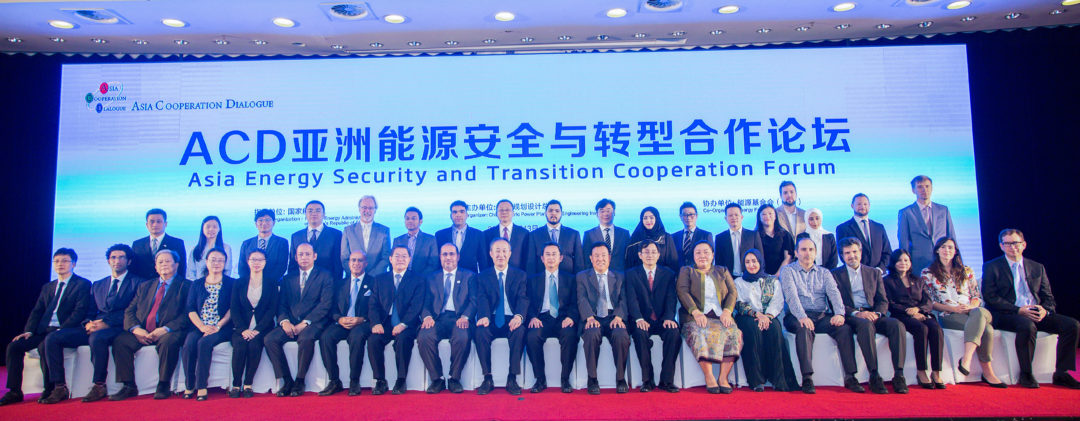
Asia Energy Security and Transition Cooperation Forum (AESTCF), Beijing
Saurabh Trivedi, CPI India’s Senior Analyst was one of the panelists at the session on ‘Energy Production and New Technologies’ at the Asia Energy Security and Transition Cooperation Forum (AESTCF) in Beijing from 13 to 14 September, 2018. The theme of the forum was Vision and Practice of Energy Security and Transition in Asia. Entrusted […]
-

Battery Subscription Facility
The Battery Subscription Facility is a conceptual financial instrument designed to address key barriers to electric bus adoption in India. The proposed mechanism would reduce upfront costs by 40-50% through a battery-as-a-service model, where the Facility would own batteries while bus operators subscribe to their use on a daily or per-kilometer basis. If implemented, this […]
-

Scaling up Rooftop Solar Power in India: The Potential of Solar Municipal Bonds
India aims for a renewable energy target of 175 GW by 2022, including 40 GW from rooftop solar, requiring an estimated USD 39 billion to achieve, with only 1.25 GW currently installed. This paper, developed by Climate Policy Initiative (CPI), Stockholm Environment Institute (SEI), and ICRIER, proposes using municipal bonds to finance rooftop solar projects. […]
-

Solar Investment Trusts (SEITs)
The Solar Investment Trusts (SEITs) are innovative investment vehicles designed to help small-scale rooftop solar developers in India raise equity capital at lower financing costs. Structured as Infrastructure Investment Trusts (InvITs), they pool multiple solar projects to reduce risk through diversification and increase market participation by opening investment to various investor classes with different risk […]
-
Decarbonization of Indian Railways
This report analyzes pathways for decarbonizing Indian Railways (IR), the world’s second largest railway network and India’s largest electricity consumer. The study finds that complete decarbonization through a mix of solar and wind power would be 17-32% cheaper for traction operations and 40-61% cheaper for non-traction operations compared to business-as-usual by 2030. The authors recommend […]
-

Did accelerated depreciation result in lower generation efficiencies for wind plants in India: An empirical analysis
India ranks fifth in wind energy installations in the world; with an installed wind capacity is 22 GW at the end of 2014. This has been made possible by a combination of federal financial incentives and state-level feed in tariffs. The federal policies are accelerated depreciation, which allows for higher depreciations in earlier years; and […]
-

FX Hedging Facility
The FX Hedging Facility is a customizable currency hedging product comprised of a foreign exchange (FX) hedging facility backed by an FX tail risk guarantee. The mechanism targets a particular tranche of FX risk and allows allocation of risks to suitable parties, and also eliminates the credit risk premium otherwise charged in a commercial currency […]
-

Cost-effective policies for reaching India’s 2022 renewable targets
India has ambitious renewable energy targets by 2022: 100 GW of solar and 60 GW of wind. Both of these technologies are perceived to be more costly than conventional, fossil-fuel, power; and, therefore, require policy support. Using representative, project-level cash flow models, we examine two related questions: First, what would be the cost of policy […]
-
Report of the Expert Group on 175 GW Renewable Electricity (RE) by 2022
This report, commissioned by NITI Aayog’s Expert Group, explores the financial, policy, and regulatory measures required to achieve India’s ambitious target of 175 GW renewable energy (RE) capacity by 2022, focusing on scaling up solar, wind, small hydro, and bioenergy. It identifies challenges such as financing, grid integration, and managing RE variability, and outlines potential […]