-

Financing Climate Action: India in a Global Context
Chapter: Blended Capital Market Mechanisms for Critical Decarbonisation Projects in India This chapter addresses two critical decarbonization challenges in India: repurposing coal-fired power plants that dominate electricity generation and enabling MSMEs to adopt low-carbon technologies. The authors propose innovative blended finance mechanisms that leverage public capital to mobilize private investment from sustainable debt capital markets. […]
-

Net-Zero Trio: Synchronizing Technology, Business and Policy for Green Transition
Chapter: India’s E-bus Adoption has a Financing Bottleneck The chapter analyzes India’s National Electric Bus Program (NEBP), launched in 2022 with a $10 billion investment goal to deploy 50,000 electric buses, highlighting the slow progress with only 1.25% of buses being electric between 2015-2023. It identifies key challenges in the current implementation approach, particularly the […]
-
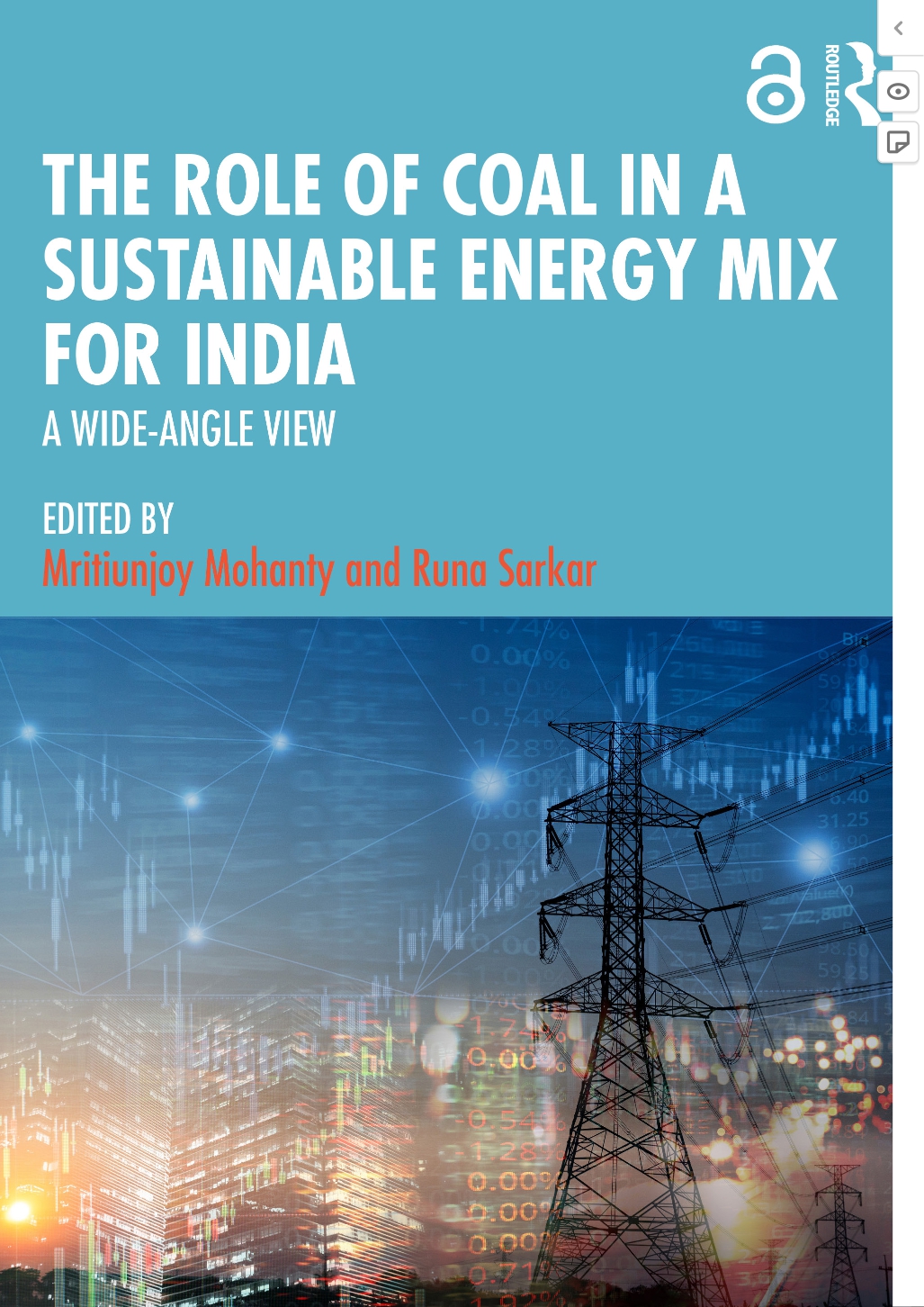
The Role of Coal in a Sustainable Energy Mix for India
Chapter: Decarbonisation Goals: Benchmarking NTPC and Tata Power with Enel and Recommending a Sustainability-Linked Finance Framework The case-study analyzes the decarbonization strategies of India’s major power companies, NTPC and Tata Power, in the context of India’s 2070 net-zero emissions target, which requires an estimated US$10.1 trillion investment (with US$8.4 trillion needed for the energy sector […]
-
Powering India’s Future: Towards a People-Positive Energy Transition
Chapter: The Central Bank’s Role in Energy Transition The chapter discusses the evolving role of central banks, particularly the Reserve Bank of India (RBI), in addressing climate change risks and supporting energy transition. It explains how central banks are developing frameworks to manage three types of climate risks: transition, physical, and liability risks, with 127 […]